



Every few months, a headline or angry X user makes the groundbreaking statement that Gen‑Z are “work‑shy”, “entitled”, or “unwilling to graft”. Yet the same critics rarely acknowledge that the UK has a long tradition of blaming young people for structural economic problems. Today, AI has begun to swallow entry‑level jobs before graduates even get a chance to prove themselves.
I graduated from university in 2025 and have been fortunate enough to land one of the 8,383 jobs available nationally, according to Azuna, in a cohort of 1,043,665 graduates from 2024/25. The numbers are harrowing, meaning I was up against an average of 125 graduates just from my year group alone for every application I submitted.
Even going to the Job Centre didn’t improve my ability to get hired. In the first meeting, I was handed a sheet of paper with a list of job boards and essentially told “good luck”. The entire experience of having the government help with the hiring process was bleak. From being told to remove my degree from my CV to hopefully become a barista, to pitching my actual career goals and being suggested something at the other end of the spectrum really opened my eyes to how much the government truly care about this generation. However, this isn’t the first time the government has turned their back on young people.

In the early 1980s, Margaret Thatcher’s government launched the Youth Training Scheme (YTS), a programme designed to tackle soaring youth unemployment. At the time, a quarter of 16- and 17-year-olds not in full‑time education were unemployed.
The scheme promised structured vocational training, but critics argued it offered little real education and allowed employers to exploit young people as cheap labour. Many trainees were paid allowances instead of wages, and eligibility for unemployment benefits was removed. School children across the country protested against the scheme, believing their futures were devalued.
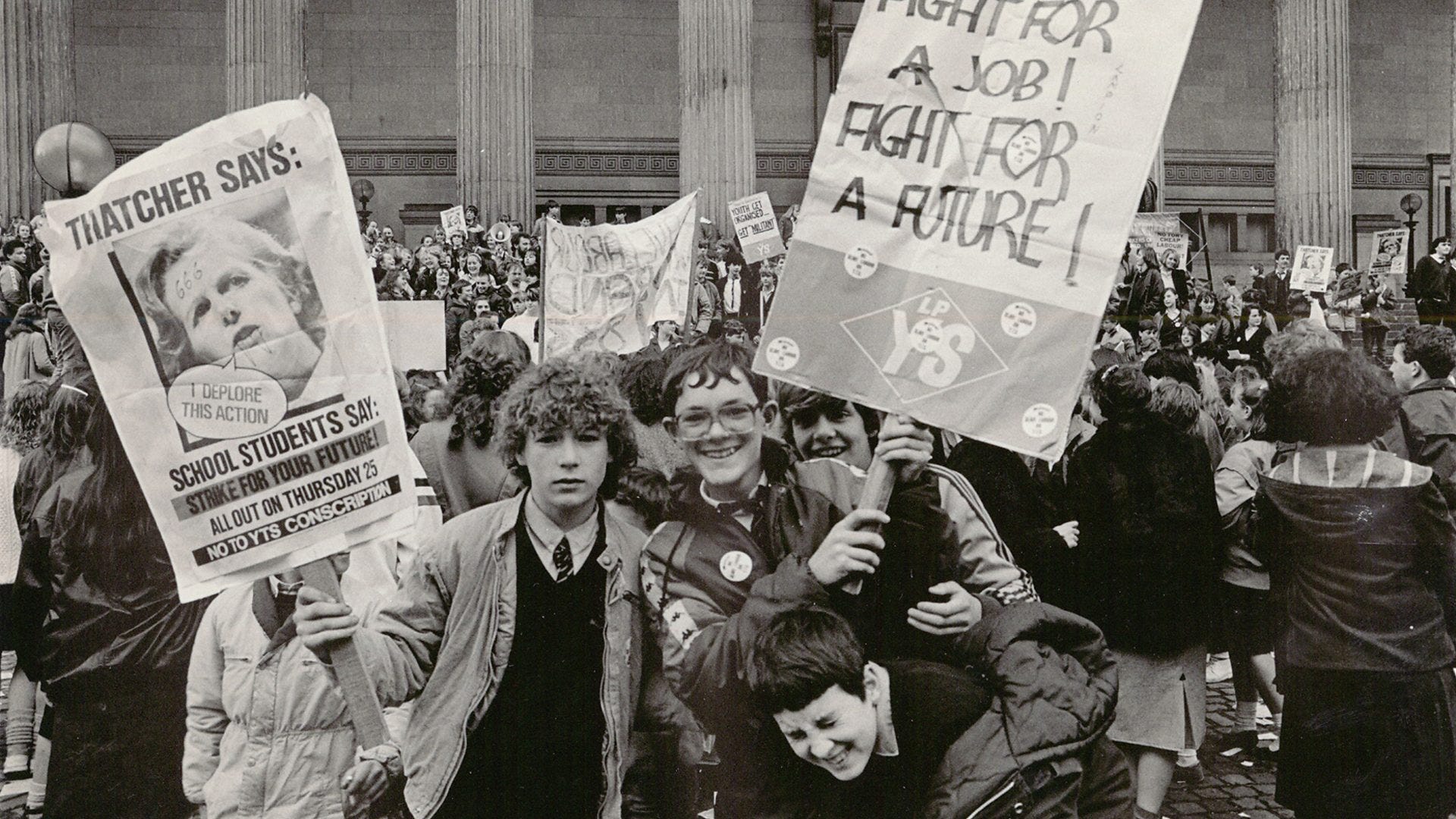
My generation isn’t facing factory closures or the “shake-out” of industrial jobs and instead entering a labour market where AI threatens to automate the very roles traditionally used to gain experience. Graduate schemes are shrinking, junior editorial and marketing roles are being replaced by automated content tools, and employers increasingly demand “two years’ experience” for jobs that barely existed two years ago. Just like the YTS generation, today’s young people are being asked to adapt to an economy that is shifting faster than the pathways designed to support them.
We are purely navigating a labour market that’s structurally hostile to beginners.
And if anything, Gen X should at least recognise the pattern. They lived through a government-engineered experiment where young workers were told to be grateful for any opportunity, even when those opportunities were underpaid, unstable, or exploitative.
The main difference now is the scale. AI is reshaping all sectors as opposed to just one, yet the narrative hasn’t changed:
When the economy fails young people, we blame the young people, and this is a vicious cycle I believe Gen Z will end in coming decades due to the austerity we have faced in our younger years and the generational attitudes towards it.
Gen‑Z aren’t the problem. Nor were Gen X. The economy is, and history shows we’ve been here before. Let’s just shut up and get on with it, I suppose.


Great read!