


Richard Tice was mid-flow at the NEC on Friday when a banner unfurled behind him showing his own leader dressed as Mr Monopoly with a sack of cash, under the slogan “Collect £5 million, burn the planet.” Greenpeace got the photograph they came for. Reform got a piece of unkind editing from reality. For a party that spent three days insisting it is a government in waiting, the image was the wrong sort of memorable.
The conference was meant to be a reset after a bruising summer. On the eve of it, Channel 4 News and the investigative outfit Verbatim aired a year of undercover footage in which Reform’s head of policy James Orr and Farage’s aide Dan Jukes were filmed arranging for an American company to pay for polling the party had quietly commissioned, and later discussing a proposed £500,000 donation from a foreign source. Orr, on camera, mused that it would technically be a donation in kind before asking whether anybody was actually going to find out. Both men had stood down before delegates finished parking, and Labour, the Liberal Democrats and the Greens went to the Met.
Farage called it entrapment, dismissed the conversations as loose pub talk, and pointed out that Verbatim was incorporated in July by people who came out of Greenpeace and the Centre for Climate Reporting. There is something in that complaint, and it is worth stating fairly. A year-long sting timed to break the night before a party conference is not a neutral act of journalism, and the delegates who told reporters they were watching a stitch-up were not being irrational. They believe they are being hunted, which they are.
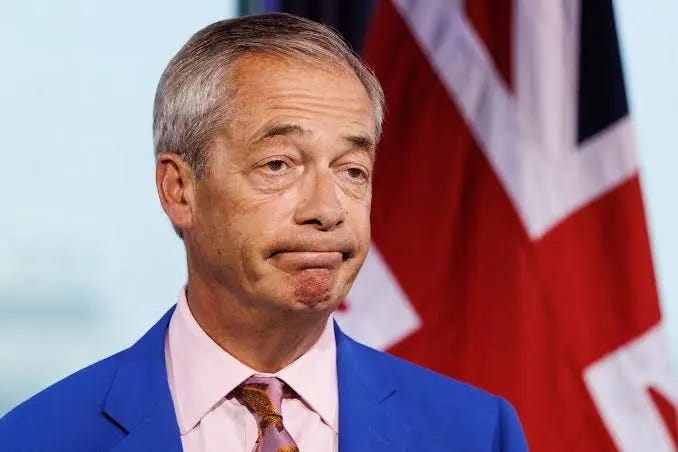
The more interesting question is whether any of it moves a single vote, and my honest answer is that it probably does not. Scandal has never adhered to Farage the way it adheres to other politicians, largely because his supporters have already priced in the establishment’s hostility. What the tape does reveal is something the party cannot spin away, which is the gap between how Reform performs power and how it actually handles it.
Three obstacles stand between Farage and Downing Street, and the film touches all of them.
Can Reform govern
The first is the governing record, which is now long enough to judge. In Kent, the party’s showpiece authority, the Musk-inspired efficiency unit was supposed to expose an inferno of waste. Paul Chamberlain, one of the cabinet members running it, admitted to the Financial Times after nine months that they had assumed they would find the craziness DOGE found in America and were simply wrong.
The £40 million in savings the council trailed proved remarkably difficult to locate, opposition councillors say the finance team holds no record of them, and council tax went up by the maximum permitted anyway. The churn tells the same story from another angle, with 74 of the 677 councillors elected on Reform’s ticket in May 2025 resigning, defecting, being suspended or expelled inside twelve months, and a further sixteen departing within three weeks of the 2026 elections.
How do you professionalise this quickly
The second is professionalisation, and here Farage has genuinely delivered. Danny Kruger, Robert Jenrick, Nadhim Zahawi and Suella Braverman are not amateurs, and Kruger now runs an entire unit preparing the party for office. Serious individuals are not the same thing as a serious institution, though, and institutions are precisely what stops a head of policy from asking a camera whether anyone will find out.
You can hire a shadow chancellor in an afternoon. Building the compliance culture that keeps you out of the Electoral Commission’s inbox takes years the party may not have.
Is the parliamentary arithmetic on their side
The third is arithmetic, and it is the one his critics consistently underrate and his supporters consistently ignore. More in Common’s July model put Reform on 293 seats, thirty-three short of a majority and fifty-three down since April, with the Conservatives clawing back ground across the Home Counties and the shires. First past the post punishes a vote spread thinly across the whole country, Restore Britain is quietly grazing on Reform’s right flank, and Burnham has functioned as the circuit breaker he promised to be. Becoming the official opposition is entirely achievable on these numbers. Becoming the government requires a coalition Farage has not yet demonstrated he can assemble.
Which brings us back to the hall in Birmingham, sold out, loud, lit up, chanting his name with total conviction. That room is real and its energy is real, and anyone who tells you otherwise has not been paying attention for a decade. A full arena is still not a country, and the people Farage needs next are the ones who were never going to buy a ticket.
Connect with us on socials
Website | Twitter (X) | Youtube | Linkedin | Tiktok | Facebook | Mailing List
Common Sense is a reader-supported publication. To receive new posts and support my work, consider becoming a free or paid subscriber.